
Understanding Geotechnical Investigations Before You Build
Understanding Geotechnical Investigations Before You Build
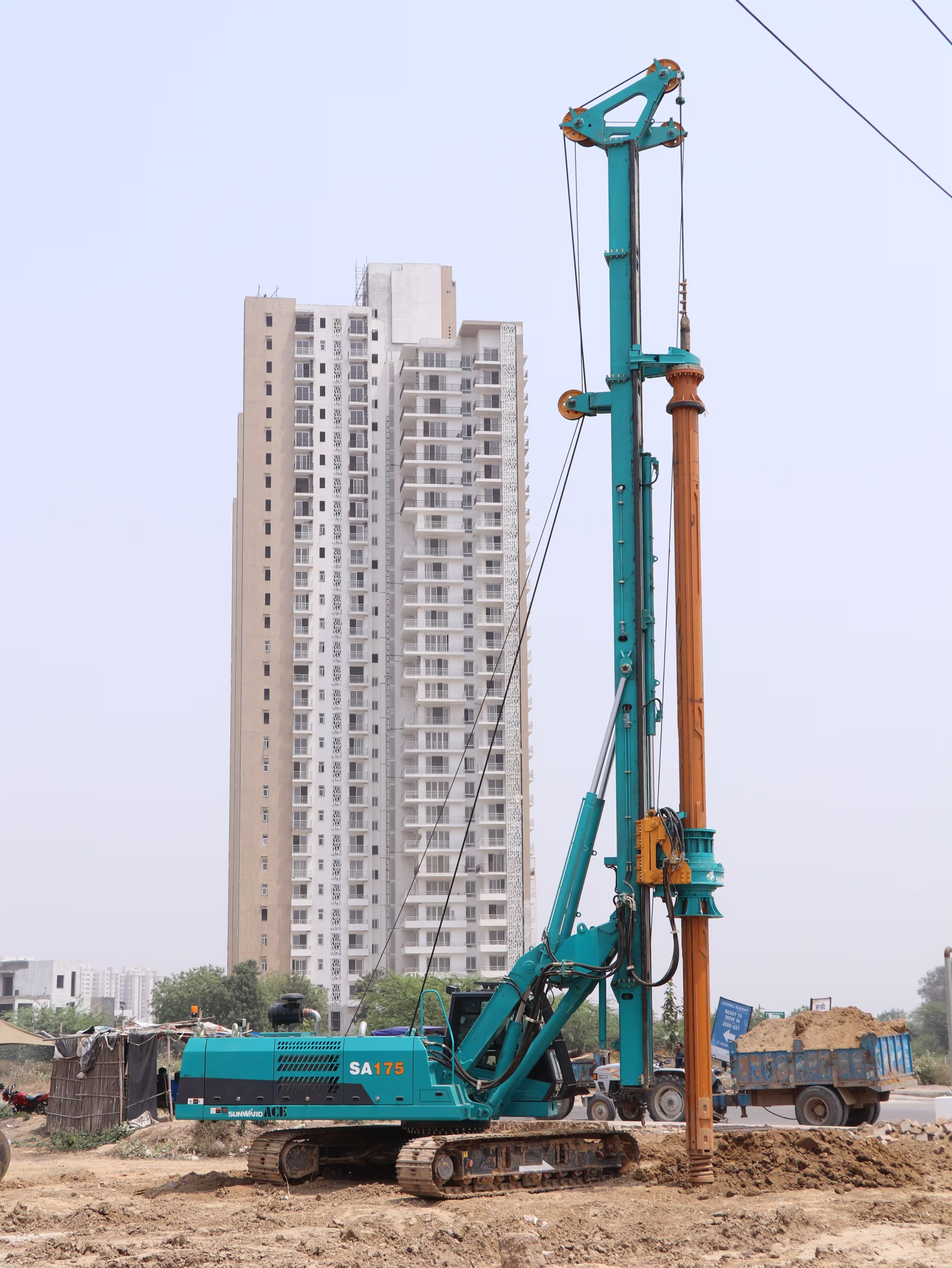
A geotechnical investigation is the essential first step in any serious construction project. By analyzing the composition, bearing capacity, and behavior of the soil and rock beneath a site, engineers can design foundations that are appropriate, safe, and cost-effective. In Cameroon, where soil conditions vary dramatically across the country, skipping this step is a risk no responsible developer should take.
- Borehole drilling to sample subsurface materials
- Standard Penetration Tests (SPT) for bearing capacity
- Laboratory analysis of soil plasticity and compressibility
- Groundwater depth and fluctuation assessment
- Identification of expansive clays and weak strata
- Formal geotechnical report with foundation recommendations
The geotechnical report produced after an investigation directly informs the foundation design. Whether the site requires isolated footings, raft foundations, piles, or soil improvement, the engineer's recommendations are grounded in measured data rather than assumptions — a critical distinction when lives and assets are at stake.
Cameroon's Diverse Geology Demands Site-Specific Studies
From the volcanic highlands around Bafoussam to the alluvial plains near Douala and the lateritic soils of the Centre region, Cameroon's geology is highly variable. A study conducted on a neighboring plot provides little reliable guidance — every project site deserves its own dedicated investigation.
Investing in Investigation Prevents Costly Failures
Foundation problems are among the most expensive defects to remediate after construction. Settlement, cracking, and heave caused by inadequate soil assessment can render a building unsafe and require extensive underpinning work. A thorough geotechnical investigation costs a fraction of that remediation.
Building Safety / Quality Control / Project Planning